Inspired Education
Back to workshops
ChemistryFull-day intensive

Chemistry — Full-day Masterclass

A focused full-day Chemistry intensive for the final weeks before the 2026 HSC. Reconnect Equilibrium and Acid Reactions, Acid/base Reactions, Organic Chemistry and Applying Chemical Ideas, then practise using chemical evidence, calculations and clear scientific explanations in HSC-style questions.

Date

Wednesday 30 September

Time

9:00 am – 4:00 pm

Campus

Macquarie University — room TBC

Availability

30 places left

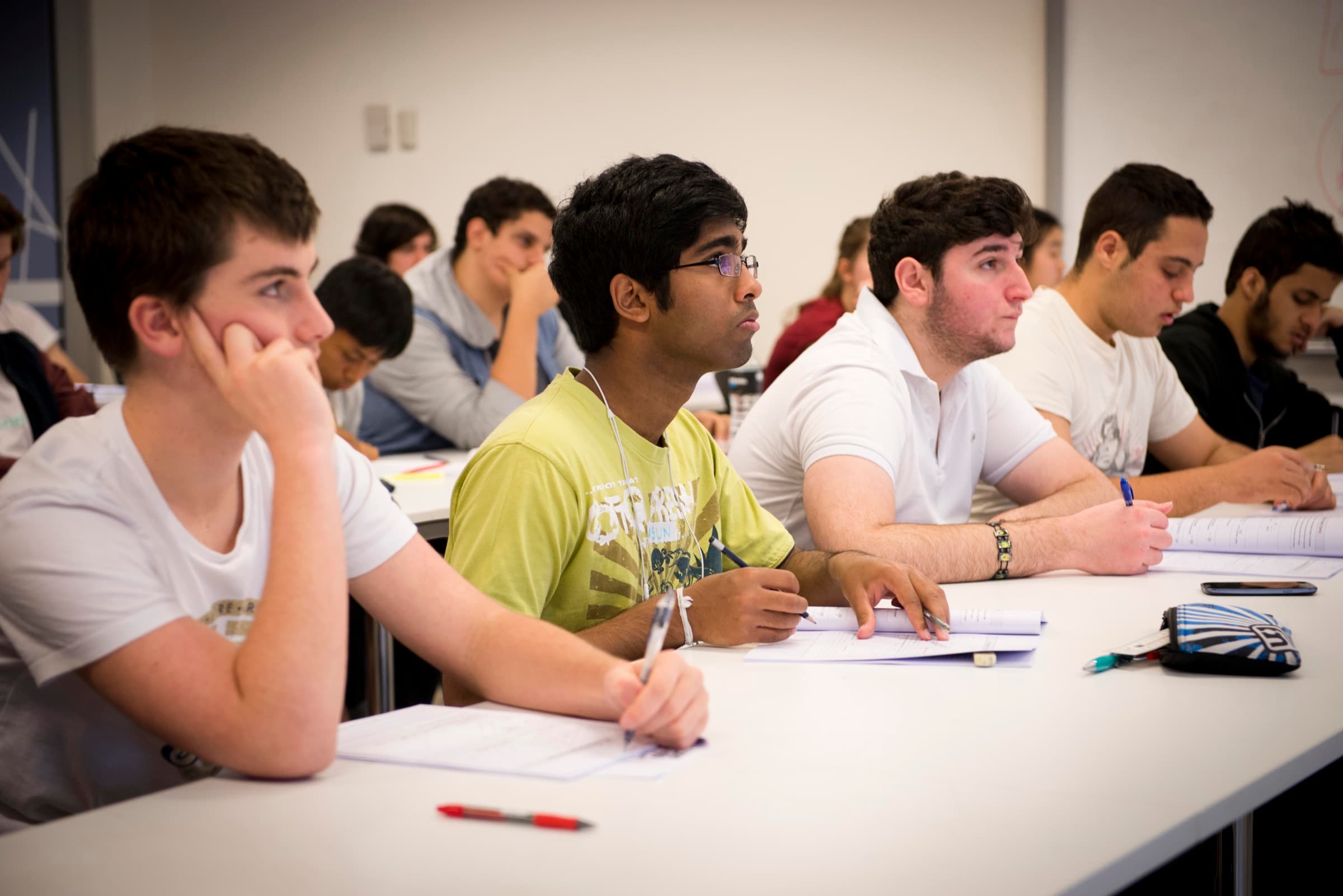
Students concentrating in a live HSC masterclass

A real InspirationED workshop

Live teaching, guided exam practice and room to ask questions.

Chemistry · Full course intensive

Read the evidence. Explain the chemistry. Earn the marks.

HSC Chemistry rewards students who can connect chemical ideas, select relevant evidence and communicate a precise scientific explanation. Across Modules 5–8, students are expected to analyse data, use quantitative relationships, interpret practical investigations and apply their knowledge to unfamiliar contexts. This workshop brings the Year 12 course together through guided HSC-style practice and practical response methods.

Best for

Year 12 Chemistry students who know much of the content but want a clearer method for data-based and extended responses, stronger chemical reasoning, more reliable calculations and greater confidence applying Working Scientifically skills in the HSC.

Aligned to the 2026 HSC

Chemistry Stage 6 Syllabus (2017)

The 2026 HSC Chemistry examination is based on the 2017 syllabus. The replacement 2025 syllabus begins Year 12 in Term 4, 2028 and has its first HSC examination in 2029.

Syllabus

Reserve this session

Per student

$250

30 places left

1

Instant confirmation after secure payment

The Year 12 course

Every part of the course connected to the way it is examined.

The day connects the Year 12 course with the examination skills students need to apply it.

Module 5 · 60 indicative hours

Equilibrium and Acid Reactions

Connect dynamic equilibrium, equilibrium constants and Le Chatelier’s principle to the behaviour of systems under changing conditions. Practise using data, equations and particle-level ideas to explain equilibrium and acid reactions clearly.

Key language: dynamic equilibrium · equilibrium constant · Le Chatelier’s principle · collision theory · acid reactions · reversible reactions · data analysis · chemical equations
Module 6 · 60 indicative hours

Acid/base Reactions

Strengthen the links between acid–base theory, pH, indicators, buffers and titration. Work through calculations, practical-method questions and explanations that connect observable evidence to particle-level chemical processes.

Key language: Brønsted–Lowry theory · pH · strong and weak acids · buffers · indicators · titration · stoichiometry · practical investigations

Module 7 · 60 indicative hours

Organic Chemistry

Build a connected understanding of structure, nomenclature, properties and reactions in organic chemistry. Practise identifying functional groups, representing reactions, explaining trends and applying organic chemistry to unfamiliar contexts and evidence.

Key language: hydrocarbons · functional groups · nomenclature · isomers · alcohols · carboxylic acids · esters · polymers · organic reactions

Module 8 · 60 indicative hours

Applying Chemical Ideas

Apply chemical knowledge to identifying and measuring substances, interpreting chemical analysis and evaluating claims. Practise spectroscopy, quantitative analysis, chemical synthesis and the evidence-based reasoning required in extended HSC responses.

Key language: qualitative analysis · quantitative analysis · spectroscopy · infrared spectroscopy · mass spectrometry · nuclear magnetic resonance · chemical synthesis · data interpretation

Across the day

Learn it. Apply it. Improve it.

01 · Reconnect

Consolidate the chemical ideas that link the modules

Review high-value concepts, equations, terminology and connections across Modules 5–8, including the Year 11 knowledge assumed in the HSC examination.

02 · Decode

Work out what the question is really asking

Use command verbs, data, diagrams, equations and practical context to identify the relevant chemical ideas and the kind of response required.

03 · Plan

Build a scientific explanation that earns marks

Move from a direct claim to selected evidence, chemical reasoning, equations, calculations and a conclusion that responds to the question.

04 · Practise

Apply the method to HSC-style questions

Attempt objective-response, data-based, practical-investigation, calculation and extended-response tasks using the decisions required in the examination.

05 · Refine

Use feedback to improve precision and depth

Review approaches with the teacher, correct weak evidence or chemical reasoning and improve explanation, calculations and examination timing for the next response.

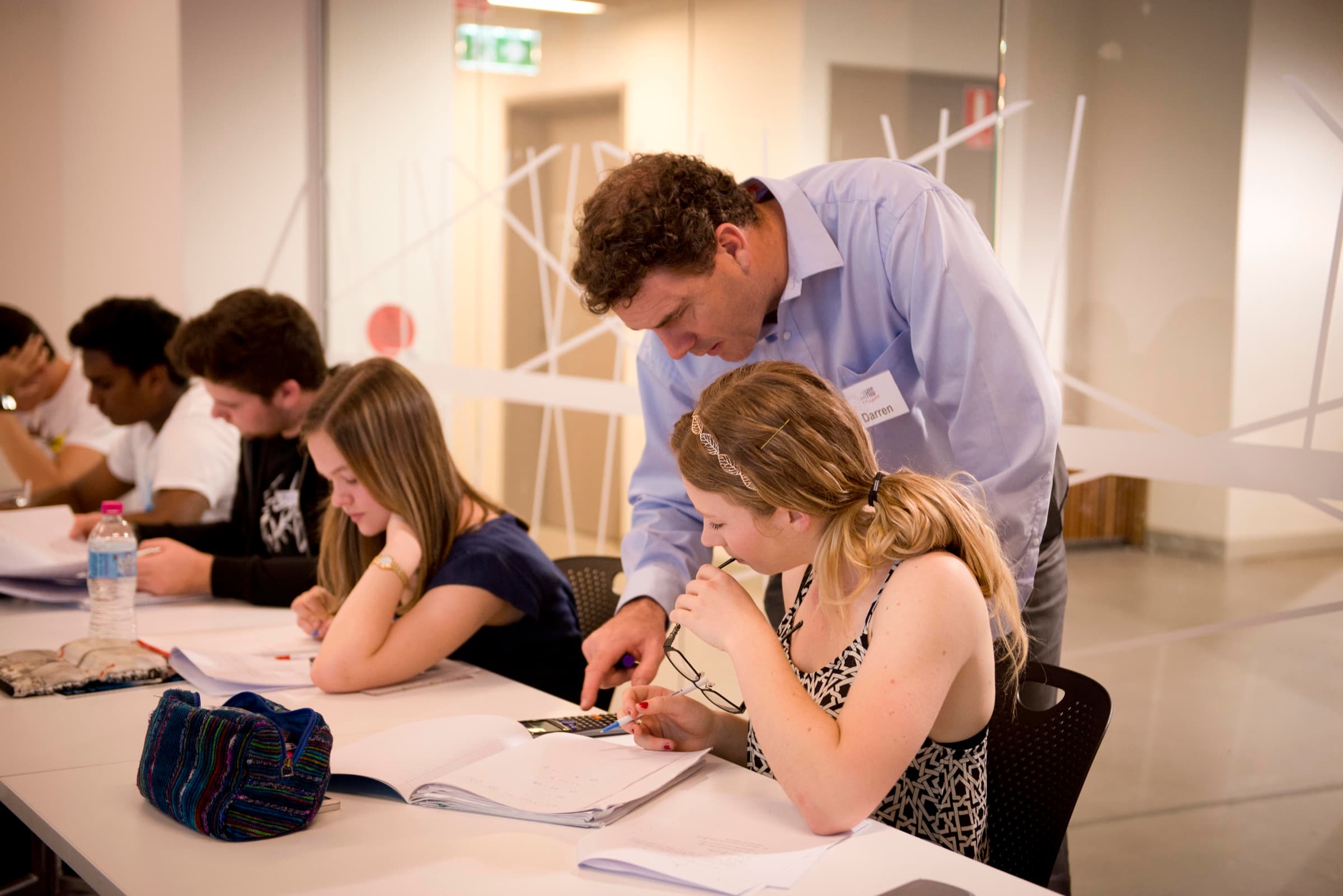
HSC teacher supporting a student during guided practice

Practice and feedback

Guided HSC-style practice with feedback students can apply immediately

Students work through a purposeful mix of objective-response, data-based, calculation and extended-response questions. The teacher models how to identify the command verb and evidence, select the relevant chemical ideas, organise an explanation and check calculations and conclusions. Students then apply the approach, compare responses, ask questions and improve their work through live guided feedback. The workshop is not advertised as a separate individual marking service.

Select and use chemical evidence with purpose

Extract relevant information from data, graphs, observations, structures and equations, then use it to support a specific scientific claim.

Write clearer chemical explanations

Connect macroscopic observations, particle-level models, chemical equations and scientific terminology rather than listing disconnected facts.

Apply Working Scientifically skills in HSC questions

Analyse reliability, validity, accuracy, uncertainty and limitations, and make justified improvements to practical methods and conclusions.

Handle calculations and unfamiliar contexts more reliably

Set out quantitative chemistry clearly, use units and significant figures appropriately, and check that numerical conclusions are chemically reasonable.

Included with the workshop

A practical Chemistry workbook for the day and final revision

Every student receives a subject-specific workbook containing concise module notes, HSC-style practice questions, data and practical-investigation prompts, calculation frameworks, response-planning guides, common-error checks and space to annotate worked approaches. Students work through it during the workshop and can continue using it in the final weeks before the HSC.

Concise module notes and key chemical language

Clear reminders of essential concepts, relationships, equations and terminology across Modules 5–8.

HSC-style data, calculation and extended practice

Questions spanning objective-response, practical-investigation, quantitative and extended-response decisions across the full course.

Response-planning and checking frameworks

Practical structures for unpacking command verbs, selecting evidence, organising an explanation and checking calculations, units and conclusions.

Expert advice and collaborative review

Teacher modelling, live guided feedback, opportunities to ask questions and a focused room where students can compare useful approaches.

Expert HSC educators

Premium take-home resources

Marking insights and exemplars

Common questions

Will we complete practical experiments on the day?

The workshop focuses on the practical-investigation skills assessed in written HSC questions: interpreting methods and data, evaluating reliability, validity and uncertainty, and explaining justified improvements. It is not advertised as a laboratory practical session.

Should I bring a calculator or formulae sheet?

Bring your usual NESA-approved calculator. The HSC Chemistry data sheet, formulae sheet and Periodic Table are provided in the examination; the workshop helps students use the information efficiently alongside the chemical reasoning they need to show.

Is this aligned to the 2026 HSC syllabus?

Yes. The September 2026 workshop uses the Chemistry Stage 6 Syllabus (2017), which remains the syllabus examined for the 2026 HSC. The replacement 2025 syllabus is first examined in the 2029 HSC.

Who is this workshop for?

Year 12 students preparing for their final school assessments and the 2026 HSC examinations.

What should I bring?

Bring a laptop or tablet if you use one for study, writing materials, water and lunch. Your workshop resources are provided.

When will I receive the exact room?

Building, room and arrival instructions are sent by email with the ticket and again before the workshop.

Can I book several workshops?

Yes. Add any three workshops in one order and the $75 bundle saving is applied automatically at checkout.