Inspired Education
Back to workshops
English StandardFull-day intensive

English Standard — Full-day Masterclass

A focused full-day English Standard intensive for the final weeks before the 2026 HSC. Reconnect Texts and Human Experiences, Language, Identity and Culture, Close Study of Literature and The Craft of Writing, then practise the question interpretation, evidence selection and controlled expression needed across both examination papers.

Date

Monday 28 September

Time

9:00 am – 4:00 pm

Campus

Macquarie University — room TBC

Availability

30 places left

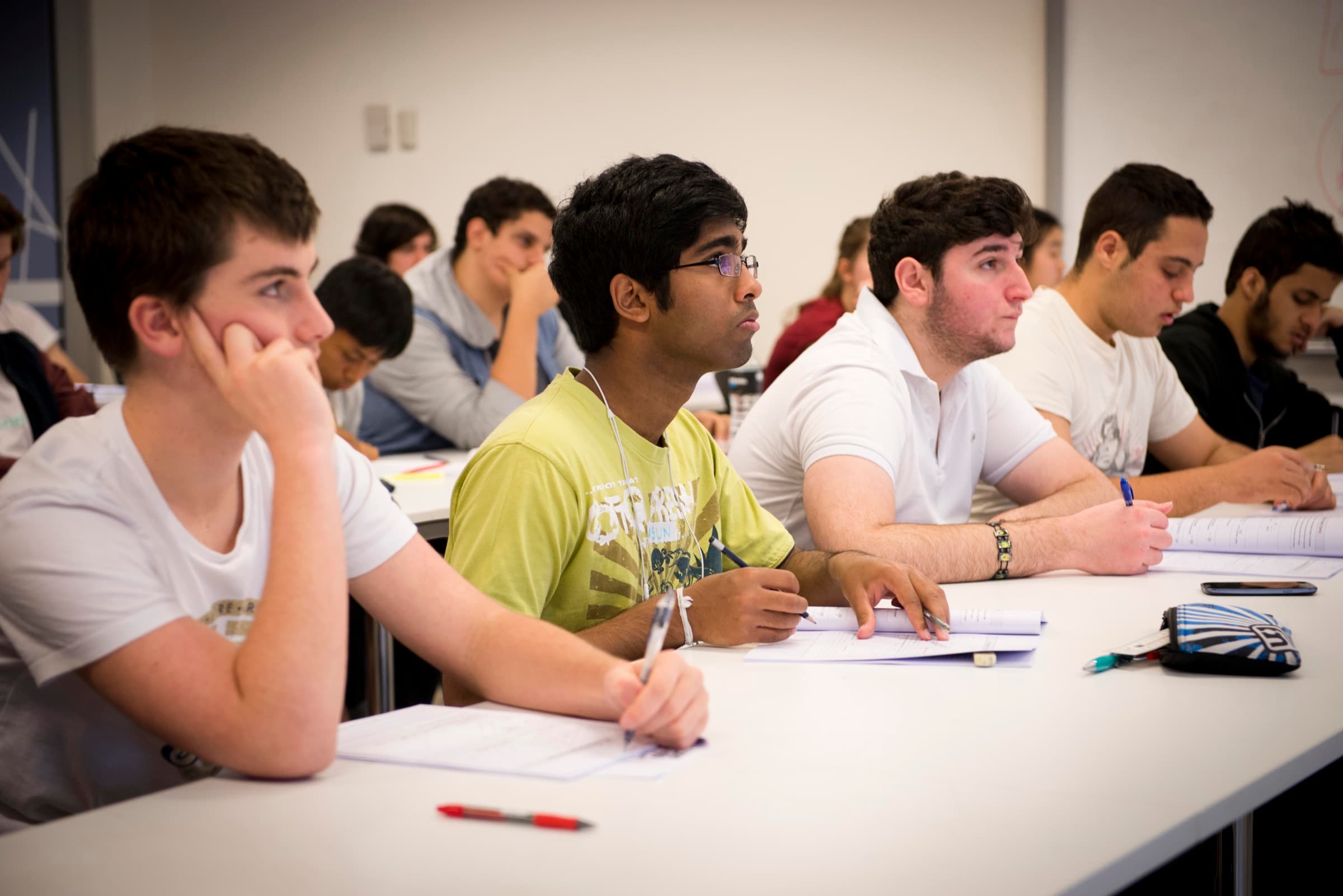
Students concentrating in a live HSC masterclass

A real InspirationED workshop

Live teaching, guided exam practice and room to ask questions.

English Standard · Full course intensive

Understand the question. Use the evidence. Control the response.

English Standard students need more than remembered quotations and prepared paragraphs. Across two HSC papers, they must analyse unseen texts, respond directly to conceptual questions, use prescribed-text evidence with purpose and adapt their writing to audience, purpose and stimulus. This workshop brings the full Year 12 course together through practical methods students can apply to the texts studied at their own school.

Best for

Year 12 English Standard students who know their texts but want a clearer examination method, stronger paragraph and whole-response structure, and more confidence adapting their knowledge to unfamiliar HSC questions.

Aligned to the 2026 HSC

English Standard Stage 6 Syllabus (2017)

The 2026 HSC English Standard examination is based on the 2017 syllabus. The replacement 2024 syllabus begins Year 12 in Term 4, 2026 and has its first HSC examination in 2027.

Syllabus

Reserve this session

Per student

$250

30 places left

1

Instant confirmation after secure payment

The Year 12 course

Every part of the course connected to the way it is examined.

The day connects the Year 12 course with the examination skills students need to apply it.

Paper 1 · Sections I and II · 30 indicative hours

Common Module: Texts and Human Experiences

Explore how texts represent individual and collective experiences, human qualities and emotions. Practise analysing unseen material and developing a sustained response that connects a prescribed text to the wording of the question.

Key language: individual and collective experiences · human qualities and emotions · anomalies, paradoxes and inconsistencies · unseen texts · prescribed text · sustained response
Paper 2 · Section I · 20 marks · 30 indicative hours

Module A: Language, Identity and Culture

Examine how language reflects and shapes individual and collective identity and how texts affirm, reveal, challenge or disrupt assumptions about people and cultural groups. Practise building a cohesive argument using form, language and evidence from a prescribed text.

Key language: language · individual and collective identity · culture · assumptions and beliefs · representation · form and conventions · values and attitudes

Paper 2 · Section II · 20 marks · 30 indicative hours

Module B: Close Study of Literature

Develop a detailed understanding of a substantial literary text and its distinctive qualities. Practise forming an informed personal interpretation, selecting close textual evidence and explaining how ideas, form and language create significance and meaning.

Key language: close study · distinctive qualities · informed personal response · ideas, form and language · detailed textual knowledge · significance and meaning

Paper 2 · Section III · 20 marks · 30 indicative hours

Module C: The Craft of Writing

Strengthen imaginative, discursive, persuasive, informative and reflective writing. Work from stimulus material while making deliberate choices about audience, purpose, voice, structure, imagery, syntax and the process of drafting and refinement.

Key language: craft of writing · imaginative · discursive · persuasive · informative · reflective · audience and purpose · stimulus · drafting and refinement

Across the day

Learn it. Apply it. Improve it.

01 · Reconnect

Consolidate the language of each module

Review the central concepts and response demands of the Common Module and Modules A–C, using clear terminology students can apply in their own answers.

02 · Decode

Work out what the question actually requires

Break down directive verbs, conceptual wording and stimulus material, then identify the relevant ideas, evidence and type of response.

03 · Plan

Build a response students can complete

Move from a direct thesis or controlling idea to a purposeful sequence of paragraphs, textual evidence and analysis matched to the marks and time available.

04 · Practise

Apply the method to HSC-style tasks

Attempt unseen questions, prescribed-text planning and selected analytical or compositional writing using the decisions required in the examination.

05 · Refine

Use feedback to improve clarity and control

Review approaches with the teacher, correct weak links between evidence and ideas, and edit expression, structure and timing for a stronger next response.

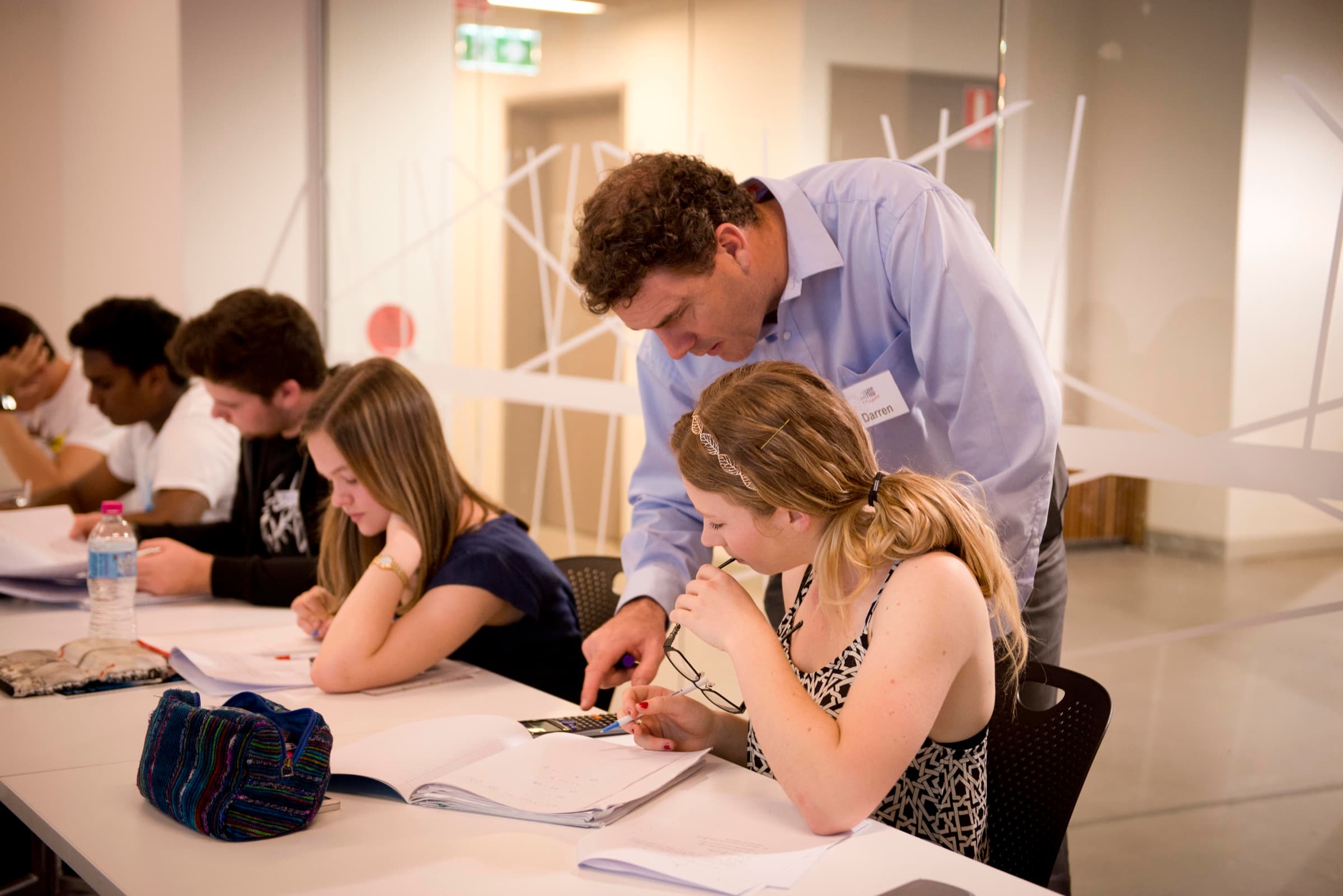
HSC teacher supporting a student during guided practice

Practice and feedback

Guided HSC-style practice with feedback students can apply immediately

Students work through unseen analysis, prescribed-text planning and selected analytical or compositional tasks across the day. The teacher unpacks directive verbs and conceptual wording, models how to select evidence and structure a response, and shows where answers commonly lose clarity or control. Students compare approaches, ask questions and use live guided feedback to improve their own work. The workshop provides guided feedback and improvement opportunities rather than a separate individual marking service.

Respond to unseen texts with more confidence

Identify relevant ideas and language choices, then shape concise analysis around the specific wording and mark value of the question.

Build a clearer sustained response

Develop a direct thesis, organise paragraphs purposefully and use evidence to explain an idea rather than retell the text.

Adapt knowledge instead of forcing a prepared answer

Select the most relevant ideas and quotations for an unfamiliar question and adjust the structure without losing confidence or control.

Write with greater purpose and craft

Make deliberate choices about form, voice, structure and language when responding to Module C stimulus material and reflective requirements.

Included with the workshop

A practical English Standard workbook for the day and final revision

Every student receives a subject-specific workbook containing concise module notes, HSC-style practice questions, unseen-text activities, planning and paragraph frameworks, writing prompts, editing advice and space to annotate modelled approaches. Students work through it during the workshop and can continue using it in the final weeks before the HSC.

Concise course and module notes

Clear reminders of module concepts, examination demands and the language students need to use accurately.

Unseen-text and HSC-style practice

Short-answer, prescribed-text and writing tasks covering the different decisions required across Papers 1 and 2.

Planning and paragraph frameworks

Practical structures for unpacking questions, forming a thesis, selecting evidence and completing a controlled response.

Expert advice and collaborative review

Teacher modelling, live guided feedback, opportunities to ask questions and a focused room where students can compare useful approaches.

Expert HSC educators

Premium take-home resources

Marking insights and exemplars

Common questions

Will the workshop cover the prescribed texts studied at my school?

Schools study different prescribed texts. The day focuses on the shared module concepts and examination skills students can apply to their own texts, while examples and discussion are used to make those skills concrete.

Will my writing receive feedback?

Students receive live guided feedback during practice and review, can ask questions and can improve their work using teacher modelling and discussion. The workshop is not advertised as a separate individual marking service.

Is this aligned to the 2026 HSC syllabus?

Yes. The September 2026 workshop uses the English Standard Stage 6 Syllabus (2017), which remains the syllabus examined for the 2026 HSC. The replacement 2024 syllabus is first examined in the 2027 HSC.

Who is this workshop for?

Year 12 students preparing for their final school assessments and the 2026 HSC examinations.

What should I bring?

Bring a laptop or tablet if you use one for study, writing materials, water and lunch. Your workshop resources are provided.

When will I receive the exact room?

Building, room and arrival instructions are sent by email with the ticket and again before the workshop.

Can I book several workshops?

Yes. Add any three workshops in one order and the $75 bundle saving is applied automatically at checkout.